
Below the muscle
When the muscles relax, a long hold passes its load to the deeper yin tissues — fascia, ligaments and joint capsules, especially around the hips, pelvis and spine. Gentle, sustained stress keeps them hydrated, supple and mobile.

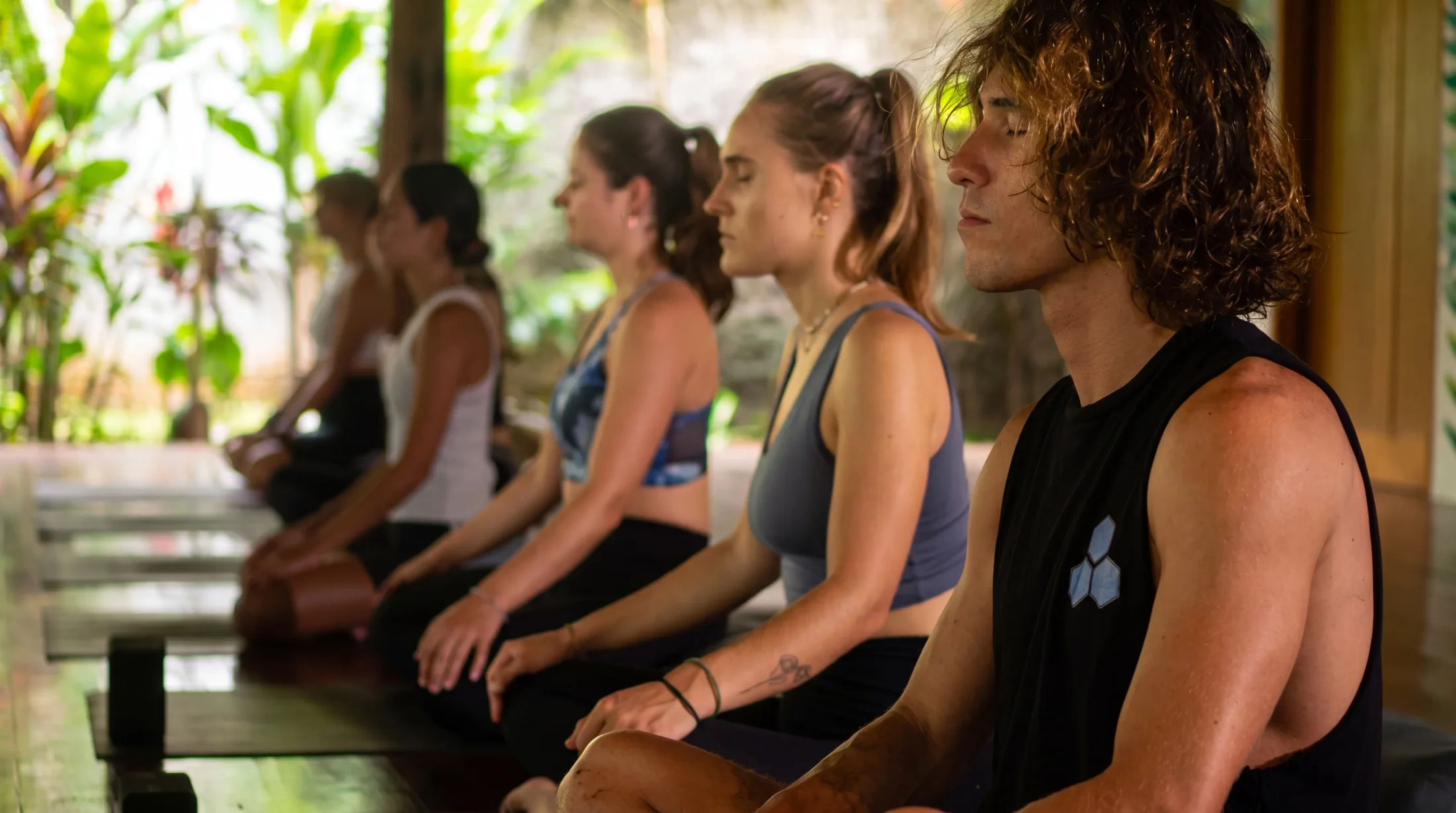
Where most yoga builds heat and strength, Yin does the opposite — slow, still and quiet. Postures are held for minutes at a time with the muscles soft, gently working the body's deeper connective tissue and settling the nervous system. Here's the practice, explained.
Yin Yoga is a slow, meditative style of yoga built around long-held, passive postures — most of them seated or lying down. Rather than moving through poses, you settle into one and stay, often for three to five minutes, letting gravity and time do the work.
Its roots run through Taoist yoga and traditional Chinese medicine. The practice was shaped in the West by Paulie Zink, then refined by Paul Grilley and Sarah Powers, who gave it its anatomical and energetic focus. The name comes from the Taoist idea of yin and yang — yin being the still, cooling, inward quality that balances the active, heating “yang” of more dynamic styles.
Three things happen when you hold a pose long enough — one in the tissues, one in the energy lines, one in the nervous system.
When the muscles relax, a long hold passes its load to the deeper yin tissues — fascia, ligaments and joint capsules, especially around the hips, pelvis and spine. Gentle, sustained stress keeps them hydrated, supple and mobile.
In Chinese medicine, qi — life energy — flows through channels called meridians. Yin poses are thought to stimulate these lines, much like acupuncture, helping energy move freely and restoring a sense of balance.
Holding still and breathing slowly shifts you into the parasympathetic state. This is why Yin feels so calming — and why it's such a natural doorway into meditation.
Paul Grilley distilled the whole practice into three simple instructions. They are all you really need.
Ease into each pose to a depth that feels challenging but never painful. The edge is a sensation to meet and respect — not to push past.
Once you've found your shape, soften and stop fidgeting. Stillness is what allows the deeper tissues to slowly receive the practice.
Stay for one to five minutes. In Yin, it is time rather than effort that lets the body gradually open.
Held over weeks and months, a steady Yin practice changes how the body and mind feel — gently, and from the inside out.
Greater range of motion in the hips, spine and joints, and healthier, more hydrated fascia.
By working the meridians, Yin aims to ease the flow of qi — the TCM view of why it feels rebalancing.
Long holds and slow breath quiet the nervous system and soften the grip of stress.
A down-regulated body sleeps more easily — Yin is often practised in the evening for exactly this.
Stillness creates space for emotions and sensations to surface, be noticed, and settle.
Sitting with sensation builds the patience and inward attention that meditation asks for.
Yin doesn't replace your other yoga — it completes it. Most active styles are “yang”; Yin is their quiet counterpart.
Yin postures carry their own names — and a softer, more inward feel than their active cousins. A handful you'll meet again and again:
Soles of the feet together, folding forward. Opens the hips, groins and lower back.
A deep, supported lunge. Releases the hip flexors and the fronts of the thighs.
A seated forward fold. Lengthens the spine and the whole back body.
A gentle, propped backbend. Compresses and tones the lower spine.
One hip folded forward. A deep opening for the glutes and outer hip.
Knees stacked one above the other. Targets the outer hips and thighs.
If this practice speaks to you, our 100-Hour Yin Yoga Teacher Training goes deeper — the philosophy, the anatomy, and how to hold space for others.
Explore the 100-Hour Training